A market that couldn’t be ignored
Brazil has rapidly emerged as one of the most important markets in the global iGaming landscape. With a population of almost 215 million and digitally engaged, sports-obsessed audience, the country has long represented latent potential.
What changed in 2025 is that the potential finally became structured.
The transition from a fragmented, grey market to a fully regulated environment marks a crucial moment not only for Latin America, but for the global industry as a whole.
Brazil has all the ingredients to become one of the most influential regulated gaming markets in the world. Its scale alone makes it impossible to ignore, but what makes the market truly significant is the way regulation has created a framework for sustainable growth, investment, and innovation. We believe Brazil will play a defining role in shaping the future of iGaming across Latin America.
– Vladimir Dokov, CEO of EGT Digital
From Grey to Regulated: A Compliance-Driven Framework
Brazil’s regulatory journey has been gradual, but decisive. After legalizing Sports betting in 2018, the country spent several years developing a comprehensive regulatory framework, leading up to the launch of a regulated market on January 1, 2025.
At the center of this framework is the Secretariat of Prizes and Betting (SPA), which oversees licensing and compliance at Federal level.
Key regulatory features include:
- Nationwide licensing regime
- Mandatory local incorporation
- High entry thresholds (licensee fees ~BRL 30 million)
- Use of “.bet.br” domains
- Strict KYC, AML and Responsible gaming controls
Basically, Brazil skipped the “light-touched” phase that we saw in other markets and moved directly to a highly controlled and regulated model.
Market potential
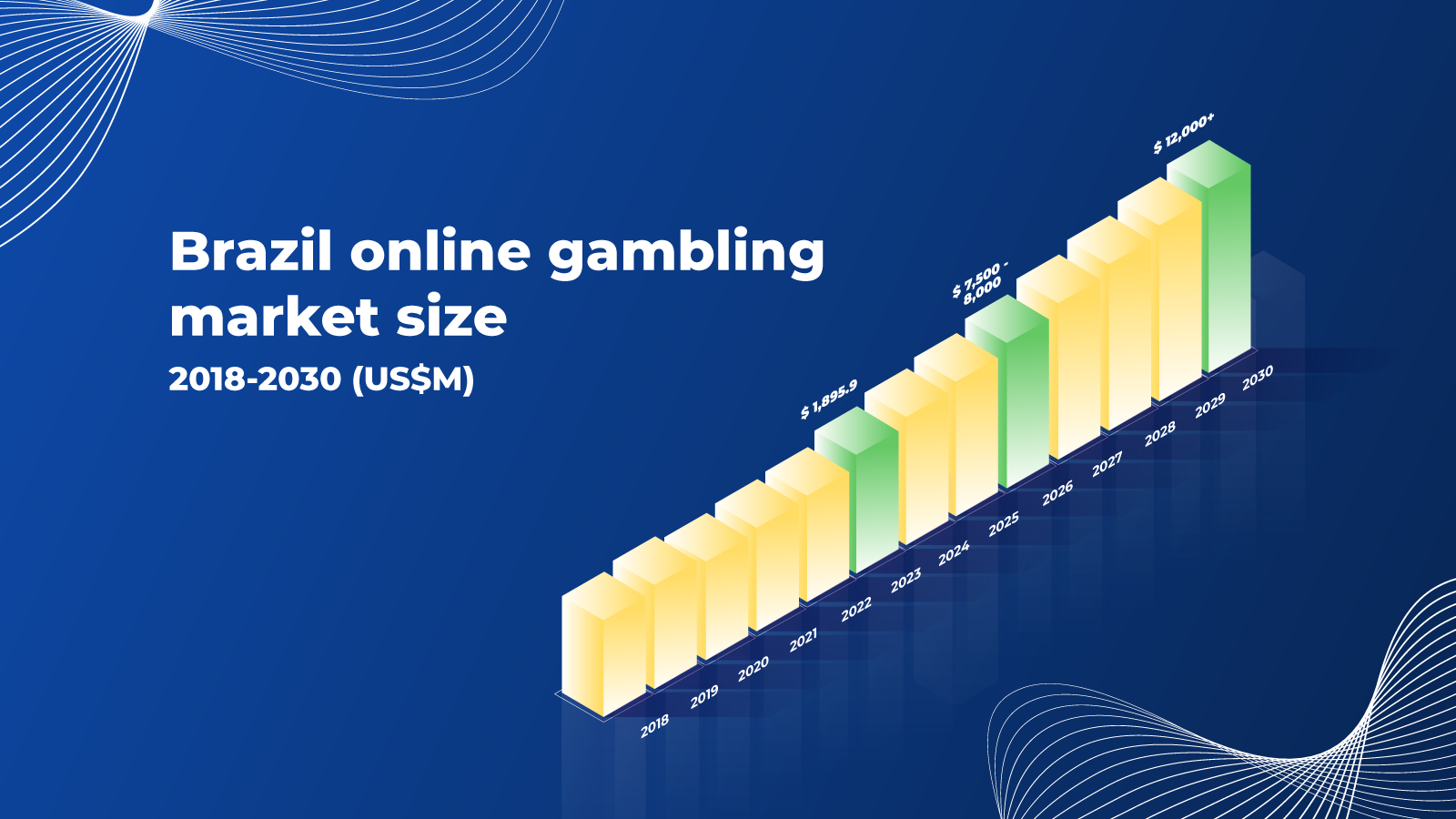
Brazil’s online gambling market size, 2018 – 2030 (US$M)
Brazil is not an emerging market in the traditional sense – it is already a high-volume betting ecosystem that is now being formalized.
Some key indicators:
- $7 billion GGR in 2025 and estimated $7.5-8 billion GGR in 2026
- Projected $12B+ by 2030
- More than 25 million active bettors, which is approx. 12% of the entire population
- Significant post-regulation growth in traffic and engagement
For B2B providers, this represents one of the largest platform and infrastructure opportunities globally.
Culture: Digitally advanced and highly engaged
Brazil’s consumer culture is increasingly shaped by strong digital adoption and mobile-first behavior. Football remains a powerful national passion and a key engagement driver, but more importantly, the country’s young, tech-savvy population is highly comfortable with digital platforms and online entertainment. High mobile penetration and rapid adoption of new technologies create a favorable environment for digital products, supporting smoother market entry and reducing many of the friction points typically seen in newly regulated markets.
Economic Impact: More Than Just Gaming

The regulation of iGaming in Brazil was basically an economic strategy.
Impact includes:
- Almost BRL 30 billion contribution to economy
- More than 15,000 jobs created
- Brought significant tax revenue streams
- Significant increase of foreign investments
Trends: What Will Define the Next Phase
As Brazil is already transitioning into a structured and very competitive market, the next phase of development will be defined not just by growth, but by maturity, consolidation and differentiation.
One of the most immediate trends is likely to be market consolidation. The high cost of entry – including substantial license fees, strict regulatory obligations, and operational requirements – creates a natural barrier that put in favor the well-capitalized big operators. While early on, the market attracted a wide range of entrants, over time the market is expected to narrow, with stronger, more compliant and better-funded players gaining more and more market share.
This dynamic is not unusual in newly regulated markets, but in Brazil is increased by the scale and complexity of the regulatory framework. Operators, that fail to align quickly with regulatory expectations in areas such as AML, Responsible Gaming or reporting for example, are unlikely to sustain long-term operations.
Another important topic, that is closely related to this is the increasing importance of localization as a competitive strategy. Brazil is not a market where general global templates can be just implemented and used. Success in this market will be very dependent on understanding the local culture, payment preferences, and user behavior. The importance of the football-driven engagement, adoption of local payment systems like Pix and the peculiarities of the local marketing channels all require specific approach.
For B2B providers this creates a significant opportunity. Platforms, CRM systems and Responsible gaming tools must be specifically tailored and adopted to the local Brazilian environment. This is likely to drive demand for partnerships with regional 3rd parties and stakeholders.
Another defining trend is the rise of technology-driven compliance and risk management. Brazil’s regulatory framework places a strong emphasis on transparency, monitoring and player protection. As a result, Compliance becomes a core operational capability.
In Brazil, compliance is no longer a back-office function. It is becoming a competitive differentiator. Operators that can combine strong regulatory standards with seamless player experiences will be in the best position to succeed. Technology plays a critical role in achieving that balance.
Vladimir Dokov, CEO of EGT Digital
Operators will have to increasingly rely on:
- Real-time transaction monitoring and automated regulatory reporting
- Advanced and complex KYC and identity verification process, which require integration with specific KYC tools
- Behavioral analytics for Responsible gaming
- Fraud detection systems, powered by data and technology
This shift is particularly relevant for suppliers and platform providers, who must ensure that their systems is not only functional, but also very flexible – so they can meet and adopt the constantly evolving regulatory expectations.
At the same time, Responsible gaming is becoming a central pillar of the market long-term’s sustainability. Regulators are putting a lot of pressure on operators to demonstrate proactive player protection measures, rather than reactive ones. This includes affordability checks and constant monitoring, early detection of problematic behavior, and player segmentation based on risk levels.
Over time (and we are actually already seeing this), this is likely to reshape how operators engage with their players – moving away from acquisition-based models towards more balanced, sustainable engagement strategies.
Another huge thing is to watch the enforcement evolution and constant battle with the black market. Unlicensed operators continue to attract users, particularly where friction (onboarding, KYC, RG requirements) is lower.
The effectiveness of Brazil’s regulatory framework will heavily depend on:
- Enforcement against the black market and illegal operators
- Payment blocking mechanisms
- Consumer awareness and trust in the licensed brands
This creates a dual challenge – regulators must enforce effectively, while licensed operators must offer a product that is both compliant and competitive.
What comes next?

The companies that will succeed in Brazil over the long term will be those that view the market as a strategic investment rather than a short-term opportunity. Localisation, compliance, responsible gaming, and technological adaptability will be essential. The opportunity is enormous, but success will belong to those who are prepared to build for the long run.
– Vladimir Dokov, CEO of EGT Digital
Brazil is already becoming a hub for innovation within the Latin American iGaming ecosystem and that continues to grow. Its size, regulatory clarity, and economic significance make it a focal point for investment, technology development and strategic partnerships.
For operators and suppliers alike, the message is clear: Brazil is not just another market entry – it is a long-term strategic commitment that will reward those who combine Compliance excellence with local insight and technological capability.