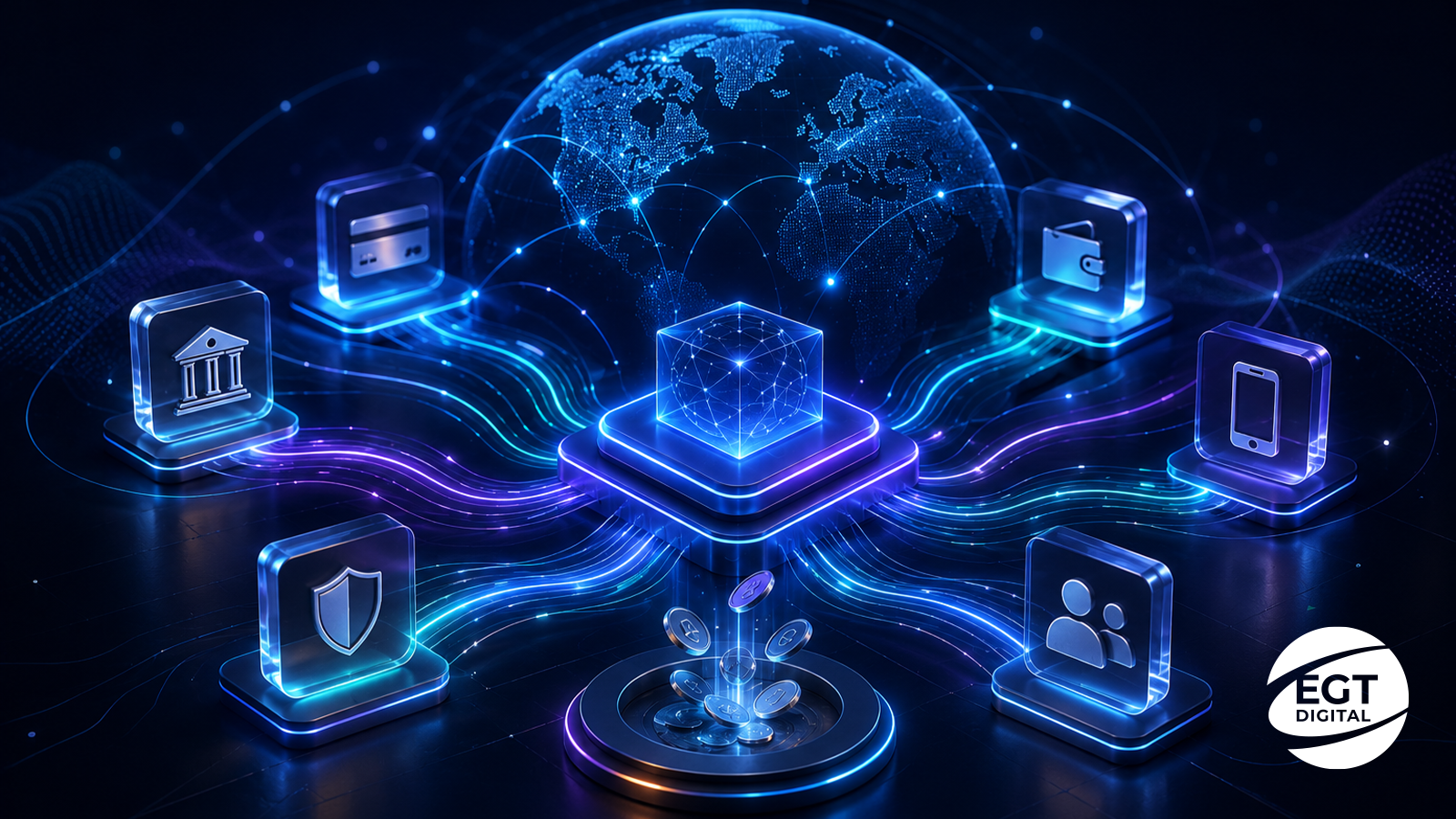
Multi-PSP orchestration in iGaming payments is the use of multiple payment service providers through a single routing layer to improve deposit success rates, withdrawal reliability, localization, and payment resilience.
Instead of sending every transaction through one provider, operators can route payments based on market, method, currency, performance, risk, or availability, helping reduce failed deposits and improve the overall player experience.
In iGaming, payments are no longer just a back-office function. They directly affect conversion, trust, retention, and how players perceive the platform. A slow deposit, failed transaction, limited local payment method, or delayed withdrawal can interrupt the gaming journey and damage confidence.
This is why multi-PSP routing and payment orchestration are becoming central to modern iGaming operations, especially for operators working across regulated markets with different player expectations, payment habits, and compliance requirements.
Why do payments affect more than just checkout?
A payment flow is never just a payment flow. It is often the moment a player decides whether the platform feels easy to use or frustrating. If a deposit fails, the session may end before it really begins. If a withdrawal takes too long, confidence starts to drop.
That is why operators are increasingly treating payments as part of the wider user journey. Players want speed, familiarity, and convenience. They also want methods that feel local to them, not something generic that was built for every market at once.
The limits of a single PSP
Using one payment provider for everything can work for a while, but it usually creates limits. No PSP performs equally well in every country, with every payment method, or under every network condition. Some are stronger for cards, others for local bank transfers, e-wallets, or APMs.
Multi-PSP routing helps solve that problem by giving operators more control over where each transaction goes. Instead of forcing every payment through the same channel, the system can choose the route most likely to succeed. If one provider is underperforming, another can take over.
That kind of flexibility is especially useful in iGaming, where traffic is diverse and market conditions can change quickly.
How is payment orchestration different from using a single PSP?
Payment orchestration sits above PSPs and coordinates multiple providers, while a single PSP is the one provider that actually processes your payments. In theory, a single PSP is simpler because it requires just one integration, one processor, one risk/compliance relationship, however, orchestration gives you smart routing, centralized analytics and failover/cascading.
That is especially important because with a single PSP, if that provider has downtime or weak approval rates in a market, you usually absorb the loss. With orchestration, you can reroute failed payments, optimize by geography or card BIN, and reduce reliance on any one provider.
Approval rates are where the value shows up
One of the clearest benefits of orchestration is approval rate optimization. Even a small improvement here can have a meaningful effect on revenue, especially for operators processing high transaction volumes.
With smart routing in place, transactions can be matched with the PSP most likely to approve them based on region, payment type, currency, or historical performance. Failed transactions can also be retried through another provider, which helps recover payments that might otherwise be lost.
For the player, this feels seamless. For the operator, it means fewer missed deposits and fewer unnecessary drop-offs.
Redundancy is easy to overlook until it matters
Nobody thinks much about redundancy until something goes wrong. But in payments, downtime can be expensive very quickly. A brief outage, a regional processing issue, or a provider slowdown can interrupt deposits and withdrawals at exactly the wrong time.
Having more than one PSP in place gives operators a much stronger safety net. If one route fails, another can step in. That does not just protect revenue. It also protects player trust, which is often harder to win back than a single transaction.
Why do deposits and withdrawals need different payment strategies?
The two core transactions in igaming – deposits & withdrawals need different payment strategies because they have different risk, compliance, and user-experience requirements. A method that is great for instant deposit authorization may be poor for payout verification, fraud control, or bank settlement on the way out.
The difference comes from the need for deposits to be optimized for speed and conversion, to get instant approval, low friction and broad acceptance rate. As for withdrawals you want trust and control, so you need broader KYC/AML checks, fraud screening, and methods that allow you to reliably transfer funds back to the user.
In regulated sectors like iGaming, withdrawal strategy often has to account for identity checks, source-of-funds review, and “return-to-source” rules, which can limit the methods you can use.
For deposits, an operator might prioritize cards, local APMs, and wallets to maximize approval rates as for withdrawals, the same operator might prefer bank transfer or a verified wallet because it is easier to control, trace, and reconcile.
Why are local payment methods critical in regulated iGaming markets?
The best payment experience is not always the most advanced one. More often, it is the one that feels familiar. Players are much more likely to complete a transaction when they see methods they recognize and trust.
That is why localization matters so much. In one market, the right choice might be local bank transfers. In another, it could be e-wallets, APMs, or real-time payment options. Orchestration makes it easier to adapt the payment mix without rebuilding the whole system every time.
It also allows operators to support emerging methods like pay by bank or crypto where those options make sense.
Personalization is starting to shape payments too
As payment systems become more intelligent, they are also becoming more personalized. Not every player behaves the same way. Some care most about speed, others about simplicity, and some value specific payment methods above everything else.
That creates an opportunity to make payment journeys more relevant. Operators can use transaction behavior, market data, and player preferences to decide which routes and methods to prioritize. Over time, payments stop feeling like a one-size-fits-all utility and start feeling like part of the product design.
Fintech is pushing the space forward
A lot of the momentum in iGaming payments is coming from broader fintech innovation. Open banking is making account-to-account payments more practical. Real-time payment rails are reducing friction. AI is beginning to influence routing, risk, and fraud decisions in real time.
Looking ahead, agentic AI and other autonomous systems may play a much larger role in how payments are managed. That could mean smarter decisions, faster reactions to failed payments, and more efficient use of data across the whole payment stack.
Why does this matter now?
Multi-PSP orchestration is becoming more than a technical upgrade. It is becoming a competitive advantage. Operators that can improve approval rates, reduce downtime, and localize more effectively are simply better positioned to meet player expectations.
And those expectations are only rising. Players want convenience, speed, and reliability. Operators want control, resilience, and better conversion. Orchestration helps connect those two goals.
What should operators look for in a payment orchestration solution?
Operators should look for a platform that improves acceptance, control, and scalability without making the stack harder to manage. The most important checks are multi-PSP connectivity, smart routing/fallbacks, clear analytics, compliance support, and the ability to scale into new markets.
EGT Digital’s approach
EGT Digital’s payment gateway is designed to support this kind of flexibility. It helps operators manage multiple providers, optimize deposits and withdrawals, and build a payment setup that is more reliable and more adaptable across markets.
In a landscape where payments are becoming a bigger part of the user experience, that kind of capability matters more than ever. See how that translates for your business at [email protected].
FAQ
How can operators evaluate whether their current payment setup is ready for multi-PSP orchestration?
Operators should assess whether their current setup can manage multiple PSPs without adding complexity to payment operations. Key areas include API integrations, transaction routing, real-time monitoring, reconciliation, fraud controls, and the ability to apply rules based on market, currency, payment method, transaction limits, or PSP performance.
A payment gateway with a customisable Rule Engine can provide a centralised way for managing these requirements, allowing operators to connect multiple PSPs while maintaining control over payment processing.
What data should be monitored to measure the performance of different PSP routes?
Operators should track metrics such as approval and decline rates, transaction speed, withdrawal completion times, processing costs, chargebacks, fraud rates, and transaction volumes for each PSP route.
Segmenting this data by market, currency, payment method, and transaction type can reveal opportunities to optimise routing. Real-time Transaction Monitoring and reporting can give operators the visibility they need to identify underperforming routes and adjust their payment strategy accordingly.
How does multi-PSP orchestration affect fraud management and transaction risk controls?
Using multiple PSPs can improve payment flexibility, but operators need consistent risk controls across every route. A centralised payment layer can apply fraud prevention, KYC and AML checks, transaction limits, and other risk rules before transactions are routed to the appropriate PSP.
With configurable rules and centralised monitoring, operators can maintain greater visibility over transaction risk while avoiding gaps between different payment providers.
What operational challenges can arise when integrating several PSPs into one payment ecosystem?
Managing several PSPs can create operational complexity, including separate integrations, reporting systems, settlement processes, APIs, and reconciliation requirements. Without a centralised system, operators may also need to manage routing decisions and payment issues across multiple platforms.
A payment gateway can bring these processes together through a single integration, with features such as a configurable Rule Engine, automated PSP cascading, and Transaction Monitoring. This gives operators greater control over how payments are routed and makes it easier to manage multiple PSP relationships from one environment.